Short answer: The seven tips below cover checking track-record length and maximum drawdown before returns, understanding the fee stack, never granting withdrawal permissions, sizing positions yourself, avoiding correlated traders, and setting an exit rule in advance. The main alternative to copy trading in 2026 is signal execution — instead of mirroring another trader’s positions, you automate signals you choose (from a TradingView strategy or a Telegram channel) under your own risk rules. AlgoVesta is a signal-execution platform (Bring Your Own Signal, or BYOS): it doesn’t copy a stranger’s account or sell signals — it executes the source you already trust across 16 crypto exchanges and MetaTrader 5, with a trade-only key that can never withdraw your funds.
To copy signals from a Telegram channel to your exchange automatically, start with the Telegram signal copier.
Copy trading promised something appealing: let a proven trader trade for you. For some people it works. But a growing number of traders are looking for alternatives — because copying a stranger means inheriting their mistakes, their risk appetite, and their bad months, with no control of your own. This guide explains what those alternatives are, how signal execution differs, and how to keep automation without giving up the wheel.
7 copy trading tips for 2026
- Check the track record length, not the last month. A trader with three profitable months and no drawdown history tells you nothing about how they behave in a losing streak.
- Look at maximum drawdown before returns. A 40% drawdown means the strategy can halve your account before it recovers, if it recovers.
- Understand the fee stack. Profit share, spread markups and subscription fees compound; a 30% profit share on a 10% gain leaves you with 7%.
- Never give withdrawal permissions. Whether you copy trades or automate signals, the API key should be trade-only.
- Size positions yourself. Proportional copying follows someone else's risk appetite; fixed risk per trade follows yours.
- Watch for correlated traders. Copying five traders who all buy the same breakout is one position with five commissions.
- Keep an exit rule. Decide in advance the drawdown at which you stop copying, and automate it if the platform allows.
If most of these tips lead you to the same conclusion, that you want someone else's signal but your own risk rules, the three alternatives below are built exactly for that.
Why traders look for copy trading alternatives
Copy trading isn’t bad — it’s just a specific trade-off, and the downsides push many traders to look elsewhere:
- You inherit someone else’s decisions. When the lead trader has a bad month, so do you. You didn’t choose the trades, but you take the losses.
- Risk mismatch. A lead trader risking 5% on a large account can wreck a small copier account sized differently. Their risk appetite becomes yours, whether it suits you or not.
- No learning, no control. Pure copy trading is a black box. You never develop your own edge, and you can’t adjust the strategy — only stop it.
- Hidden dependence. If the trader you follow quits, changes style, or blows up, your results vanish with them.
None of this means copy trading is wrong for everyone. It means traders who want control need a different model.
The main alternatives to copy trading
If you want automation without handing over the decisions, there are three broad paths:
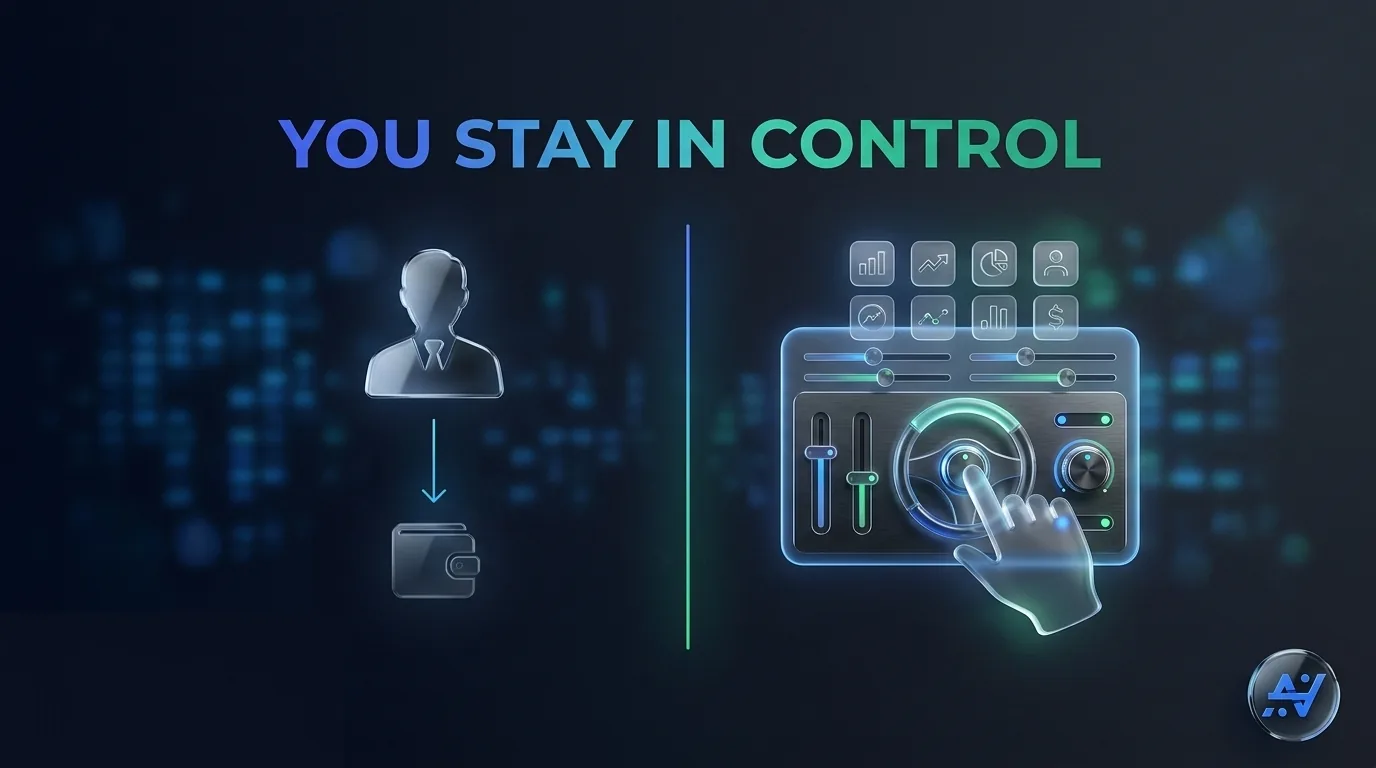
- Signal execution (Bring Your Own Signal). You pick the signal source — your own TradingView strategy or a Telegram channel you trust — and an execution platform trades it automatically under your rules. You keep control of what you trade and how much you risk; automation just removes the manual delay. This is the closest alternative that keeps the hands-off convenience and your control.
- Building your own bot. Full control, but you write the code, host it, manage API keys, and maintain it. Powerful for engineers, impractical for most traders.
- Manual trading with alerts. You get notified and place every trade yourself. Maximum control, zero automation — and the manual delay that costs entries.
For most people, signal execution is the sweet spot: the automation of copy trading, minus the loss of control.
What copy trading actually is
In copy trading, you connect your exchange account and follow a specific trader’s profile. When that trader opens a position, the platform mirrors it into your account automatically — same entry, same direction, often the same stop-loss and take-profit, scaled to your account size.
The defining trait: you are following a person’s decisions. You don’t choose the individual trades; you choose the trader, then their judgment drives your account. Your funds stay in your own exchange account — you grant permission to mirror trades, not to hold your money — but the decisions are theirs, not yours.
Suits you if: you want a hands-off approach, can’t watch the market, and are comfortable letting a vetted trader’s track record do the work.
Trade-off: dependence — a size mismatch between a large lead account and your small one changes the risk profile, and you inherit both the trader’s wins and their mistakes.
What signal automation actually is
Signal automation is different. A signal — a structured trade idea with entry, direction, and levels — comes from a source you pick: your own TradingView strategy, or a Telegram channel you’ve chosen to trust. Automation then routes that signal to your exchange and executes it in seconds, under rules you defined in advance.
The defining trait: you choose the signal source and you set the rules. The automation removes the manual delay (no more seeing a signal four minutes late and missing the entry), but the decision of what to trade and how much risk to take stays with you.
Suits you if: you already have an edge — a strategy that works or a channel you trust — and you want fast, consistent, rule-based execution without sitting at a screen.
Trade-off: you need a signal source worth following. The automation is only as good as the signal going into it.
Signal execution vs. copy trading, side by side
| Copy trading | Signal execution (BYOS) | |
|---|---|---|
| Who chooses the trades | The lead trader | You (your strategy or chosen channel) |
| Who sets the risk | Inherited from the lead | You define size, leverage, limits |
| Your control | Start/stop only | Full — rules, filters, sources |
| Source of edge | A stranger’s track record | Your own strategy or trusted channel |
| If the source fails | Your results collapse with them | You switch sources, rules stay |
| Learning | Black box | You stay close to every decision |
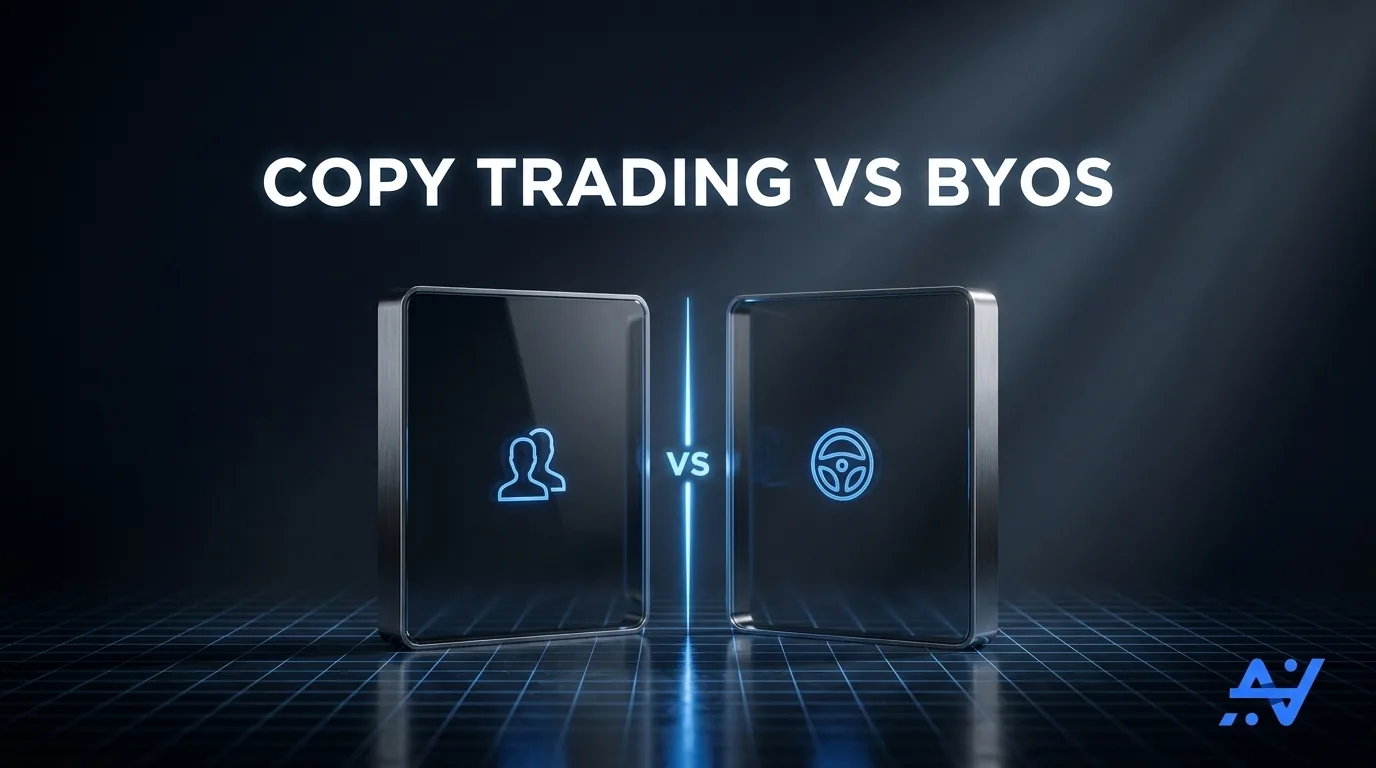
The core difference is control. Copy trading automates someone else’s judgment; signal execution automates yours.
How AlgoVesta fits: automation without giving up control
AlgoVesta is built on the Bring Your Own Signal model — a deliberate alternative to copy trading. It does not copy a stranger’s account, and it does not sell you signals. You bring the source you already trust; AlgoVesta executes it under your rules.
- You choose the signal. A TradingView strategy or a Telegram channel — your call, and you can switch anytime while your risk rules stay put. (For the deeper distinction, see copy trading vs. signal automation.)
- You set the risk. Position size, stop-loss, take-profit, daily loss limits — enforced on every order, not inherited from a stranger.
- 16 crypto exchanges and MT5, one platform. The same engine executes across spot, futures, and MetaTrader 5 forex, under one risk framework. (More on running both crypto and forex from one platform.)
- Optional AI risk filter. Screen each signal before it executes — a layer pure copy trading doesn’t offer.
- Trade-only, by design. Your API key is AES-256 encrypted with withdrawal permission never granted, so funds can’t be moved out. (How the security model works: is it safe to connect an API key.)
Tips for choosing a copy trading alternative in 2026
A few things worth checking before you move away from copy trading, whichever model you end up with:
- Check where your risk rules actually live. Some "alternatives" still execute someone else's position sizing under the hood. Make sure your stop-loss, take-profit, and daily loss limit are yours, not inherited from the source.
- Test with paper trading first. Real market prices, zero risk — run your chosen signal source through your own rules for a few weeks before committing real capital.
- Confirm the API key can't withdraw funds. A trade-only key (withdrawal permission never granted) is the difference between an automation tool and a custody risk.
- Look at exchange and asset coverage. If you trade both crypto and forex, running two separate tools doubles the operational overhead; one platform covering both is usually simpler to monitor.
- Read the fine print on signal ownership. Some copy-trading marketplaces can change or remove a trader you're following with no notice; a signal source you choose and control doesn't carry that risk.
When copy trading still makes sense
To be fair: if you have no interest in developing your own edge, can’t watch the market at all, and are genuinely comfortable depending on a vetted trader’s decisions — accepting their losing months alongside their wins — copy trading can suit you. It’s the most hands-off option. The trade-off is permanent dependence and zero control. Signal execution exists for the traders who want the automation without that trade-off.
Try it before you commit
You don’t have to guess which model fits. AlgoVesta includes a paper-trading mode with a $5,000 virtual balance and real market prices, so you can run your own signal source through your own rules and see signal execution in action — before connecting a real account or risking a cent. Plans start at $23.42/month (billed yearly), with a 7-day free trial and no card required.
The bottom line
The best alternative to copy trading isn’t a better trader to copy — it’s a model where you keep control. Signal execution automates the signals you already trust, under your own rules, across 16 exchanges and MT5, without inheriting a stranger’s mistakes. Bring your own signal; keep the wheel.
Start with the difference between copy trading and signal automation, or see how AlgoVesta executes across crypto and forex. If you'd rather direct execution by talking to an AI assistant, see what an MCP trading server is.
Learn more: 16 crypto exchanges.
Related comparisons: Zignaly · Bitsgap · Cornix
Disclaimer. AlgoVesta is signal-routing automation infrastructure (Bring Your Own Signal). It does not provide copy trading, signals, investment advice, or trading recommendations; it runs execution infrastructure on your behalf using trade-only credentials and does not hold, receive, or move client funds. You choose the signal sources you connect and the rules you define, and you are responsible for both. Comparisons reflect general differences between trading models at the time of writing. Crypto and forex trading carry substantial risk of loss; leveraged positions may be fully liquidated. Past performance does not guarantee future results.
The authoritative version of this article is the English original; translations are provided for convenience.
Ready to automate your trading workflow?
Connect your exchange with secure, trade-only API keys.
Start Free — 7 Days